

What's up North™, Charlie Nardozzi – Plants to Help Pollinators
Pollinating insects need our support, so let’s talk about growing a pollinator garden and the ideal plants to include in it if you’re gardening in the North.
Many gardeners know the plight that pollinating insects are facing today. These essential creatures are responsible for one-third of the food we eat, and for pollinating flowers that increase biodiversity. Despite dramatic declines in some pollinator populations, there is still time for you to help by growing some of the flowers they prefer as food sources. So, let’s talk about pollinator gardens, including some pollinator plants I recommend for our northern climate.
Pollinator Garden Quick Tips
When selecting plants to support pollinators, it is important to grow a diversity of plants with varying flower shapes and sizes to meet the needs of the most insects possible. Pollinators tend to be attracted to specific flower shapes. Plan carefully so there are many different kinds of blooms for them to feed on from spring to fall. Grow larger patches of the same flower so they won't have to work so hard to gather the nectar and pollen they need from a particular area.
It also helps to provide a clean water source for pollinators to drink from. Avoid using pesticides near the water or on open flowers. Allowing hiding places for pollinators is important too, so they can evade predators like birds.
Recommended Pollinator Plants for the North
There are many great pollinator plants to choose from. I’ll show you a few I recommend that bloom in a variety of flower shapes throughout the growing season.
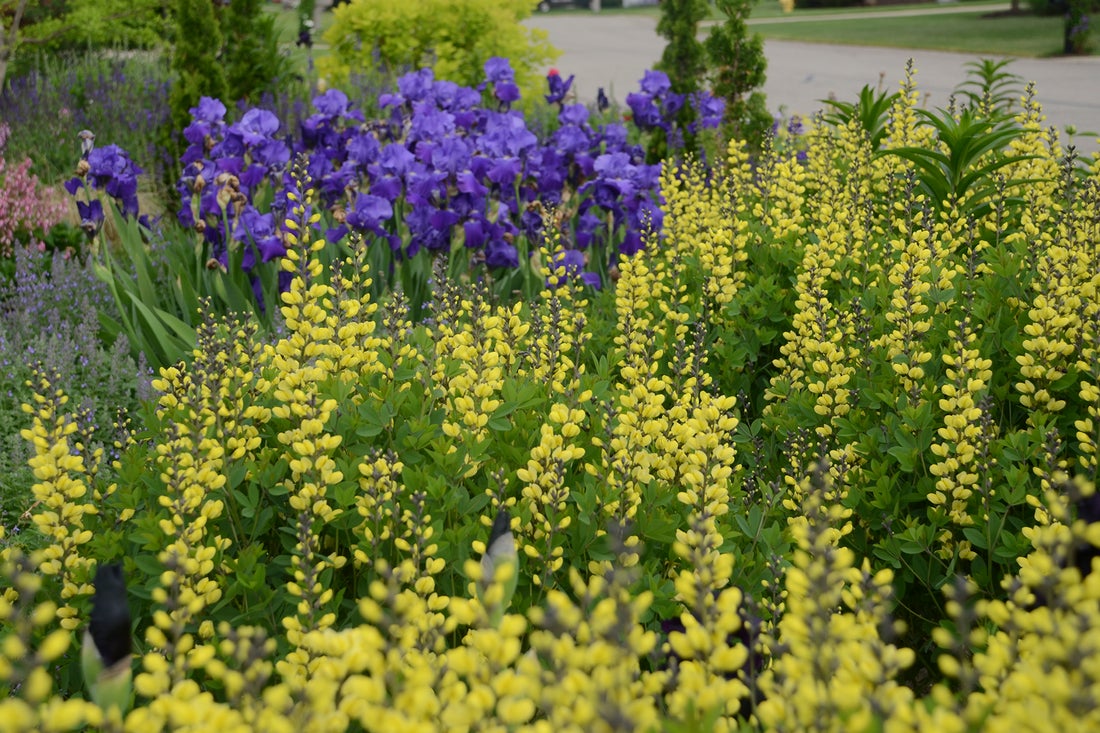
For springtime, try native false indigo (Baptisia) cultivars. This herbaceous perennial produces long stalks of pea-shaped flowers that pollinating bees love. Birds enjoy the seed pods that develop after the flowers if you don’t deadhead them. Some of the most unusual colors in the Decadence® series are Decadence ‘Dark Chocolate’, Decadence ‘Lemon Meringue’, Decadence ‘Cherries Jubilee’ and Decadence Deluxe ‘Pink Truffles’. Plant this long-lived perennial in zones 4-9 in full sun to light shade. Once established, it is very drought tolerant and salt tolerant.

A flat landing pad-shaped flower that many kinds of pollinating bees and butterflies enjoy is yarrow (Achillea). Like false indigo, this tough perennial is drought and salt tolerant, with an extra bonus of being deer and rabbit resistant. Grow it in full sun in zones 3-8. The Firefly series includes fairly tall 22 to 36” tall varieties, depending on the cultivar you grow. They bloom abundantly in shades of pink, yellow, peach, red and white. If you cut them back by about half after the flowers are spent, you’ll encourage repeat bloom.

A native, summer blooming perennial that is favored by bees and butterflies but not by deer is threadleaf coreopsis (C. verticillata). Its flowers have radial symmetry, which means the petals are arranged around a central axis, creating a rounded shape. This same trait is found in the flowers of daisies, coneflowers and black-eyed Susans. Pollinating bees recognize such flowers as a potential food source. Look for the Designer Threads® series of threadleaf coreopsis for northern gardens in zones 5-9. They are long-blooming varieties in a range of colors, all of which have good mildew resistance and are drought tolerant.
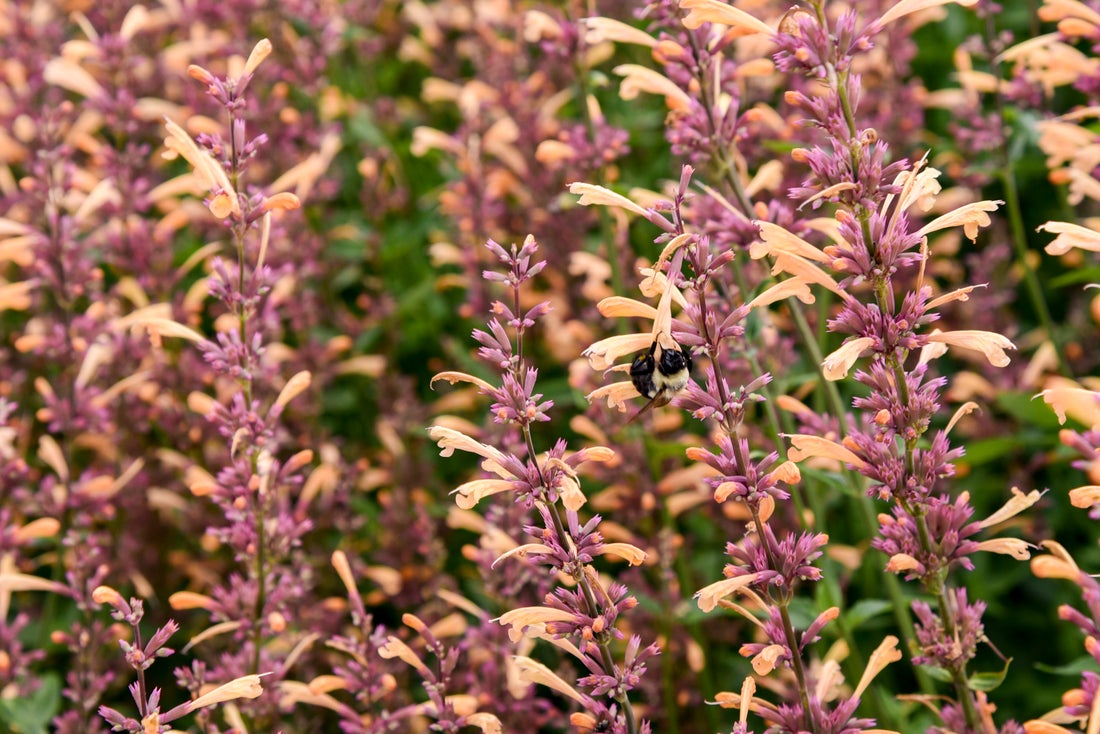
A native, sun-loving perennial that has great fragrance which attracts bees and other pollinators as well as hummingbirds is anise hyssop (Agastache). Meant to Bee® ‘Queen Nectarine’ is a long-blooming variety that produces peach colored flower spikes all summer and into fall without deadheading. It’s a taller perennial at 30 to 36 inches, which makes it great for the middle of the border. Meant to Bee® 'Royal Raspberry' is similar but with rosy purple flower spikes. Anise hyssop needs full sun and well-drained soil to thrive in zones 5-9.

Lastly, come autumn it’s important to keep the flowers coming to continue to support pollinators through the end of the season. Autumn stonecrop (Sedum) is a low maintenance, succulent perennial that thrives in full sun and well-drained soil in zones 3-9. It produces clusters of star-shaped flowers that have radial symmetry like threadleaf coreopsis, so they are a favorite of pollinators that are foraging in preparation for winter.
Some stonecrops, like Rock ‘n Round® ‘Bright Idea’, bloom earlier in the summer, but classic autumn stonecrops like Rock ‘n Grow® ‘Midnight Velvet’ flower from late summer into fall. They are all generally very heat, drought and salt tolerant. Most can be grown in containers as well as in the landscape. They are very easy to maintain and don’t even need fertilizer to grow well.